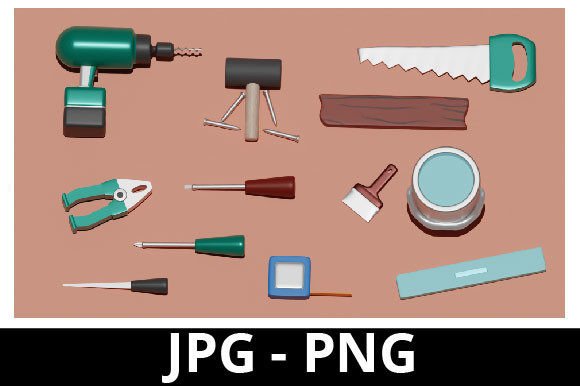
3D Rendered Carpenter Set for Design Projects
A 3D rendered carpenter set is a digital asset collection that includes realistic, high-quality 3D models of common carpentry and construction tools. These models are often rendered in formats like JPG or PNG and can be used for design visualization, graphic illustration, marketing materials, and educational content. The set typically features tools such as hammers, saws, pliers, screwdrivers, drills, rulers, paint brushes, buckets, nails, and more — all designed to look authentic and professional when integrated into visual projects.
Why People Use a 3D Rendered Carpenter Set for Design
Designers, illustrators, architects, and marketers frequently turn to 3D rendered carpenter sets for a variety of reasons. One primary use is to create realistic product mockups for websites, brochures, or promotional campaigns related to home improvement, renovation services, or DIY kits. These assets help convey the tools' utility and quality without requiring physical photography.
Another reason is visual storytelling. Whether it's an infographic about construction safety or a step-by-step guide on how to build a bookshelf, having accurate and detailed 3D renderings of carpenter tools adds clarity and professionalism to the message.
Benefits of Using 3D Rendered Carpenter Sets
- Realism and Detail: High-resolution renders make the tools appear lifelike, enhancing the overall quality of the design project.
- Flexibility: These assets can be easily edited, resized, rotated, or placed in different environments using graphic design software like Photoshop or Illustrator.
- Time Efficiency: Instead of sourcing or photographing real tools, designers can instantly access a ready-made set from a ZIP folder, speeding up the creative process.
- Cost-Effective: Digital toolkits eliminate the need for expensive photo shoots and reduce the cost of producing visually appealing content.
- Isolated Backgrounds: Most 3D rendered sets come with transparent or isolated backgrounds, allowing seamless integration into various design layouts.
Potential Tradeoffs and Considerations
While 3D rendered carpenter sets offer numerous advantages, there are some tradeoffs to consider. For one, the initial investment may vary depending on the provider. Some free sets might lack detail or realism, while premium options can be costly but provide higher quality and better customization options.
Additionally, not all users have the technical skills required to manipulate 3D objects effectively. Basic knowledge of graphic design software is usually necessary to achieve the best results. If you're working on a time-sensitive project and don’t have experience with these tools, the learning curve could slow things down.
Another consideration is the licensing terms of the 3D rendered assets. Always verify whether the set allows commercial use, redistribution, or modification. Some sets may only be suitable for personal or editorial purposes unless explicitly stated otherwise.
When It’s a Strong Fit
A 3D rendered carpenter set is particularly well-suited for the following scenarios:
- Marketing and Advertising: When promoting carpentry-related products or services, such as renovations, handyman services, or toolkits, using realistic 3D images helps capture attention and build trust.
- Architectural Visualization: Interior designers and architects may use these assets to show the placement of tools in a workspace, helping clients understand the practicality of a layout.
- Educational Content: Tutorials, infographics, or training materials benefit from clear, scalable, and editable 3D images that illustrate correct tool usage and safety procedures.
- Product Packaging and Catalogs: Companies selling carpentry tools or equipment can enhance their catalogs with consistent, high-quality visuals that showcase each item accurately.
Alternatives to Consider
In some cases, alternatives may be more appropriate than a 3D rendered carpenter set. For instance, if your project requires very specific angles or lighting conditions that aren't covered by the available assets, hiring a professional photographer to take custom photos might yield better results.
Alternatively, if you're aiming for a more stylized or cartoonish look, hand-drawn illustrations or vector graphics could be a better fit. These options allow for greater artistic freedom and may align better with certain brand identities or target audiences.
For those working within tight budgets, stock image platforms or open-source 3D model repositories can also serve as viable sources of carpenter-related imagery. However, these options may not offer the same level of customization or realism as dedicated 3D rendering sets.
Practical Decision-Making Insights
To determine whether a 3D rendered carpenter set is right for your needs, consider the following factors:
- Project Scope: Will the tools be part of a larger scene (like a construction site) or used individually in close-ups? A comprehensive 3D set ensures consistency across multiple visuals.
- Quality Requirements: Do you need ultra-realistic textures and lighting effects? High-end 3D renders can meet this demand, whereas simpler graphics might not.
- Technical Proficiency: Are you comfortable using design software to adjust and place 3D assets? If not, you may need to invest time in learning or hire someone who can.
- Usage Rights: Make sure the set you choose has the appropriate license for your intended use, especially if it involves commercial applications or publishing online.
Expectations and Best Practices
When working with a 3D rendered carpenter set, it’s important to manage expectations. While the images are highly realistic, they may still require some post-processing to blend seamlessly into your design. This can include adjusting shadows, reflections, or background elements to match your composition.
Best practices include:
- Using layers and masks to fine-tune positioning and blending.
- Ensuring color consistency between the tools and the rest of the image.
- Testing different angles and lighting setups before finalizing the design.
- Organizing the ZIP folder contents properly to avoid confusion during editing.
Final Thoughts
The 3D rendered carpenter set is a valuable resource for anyone involved in design work related to carpentry, construction, or renovation. It offers a realistic and efficient way to visualize tools without the limitations of physical photography. However, its effectiveness depends on your specific goals, budget, and technical capabilities.
If you're looking to produce professional-grade visuals quickly and affordably, a 3D rendered carpenter set could be the perfect solution. On the other hand, if your needs are more specialized or artistic, exploring alternative imaging methods may lead to better outcomes. Always evaluate your project requirements carefully before selecting a toolset, ensuring it supports both your creative vision and functional needs.